


Give a gift to the Journalism Collaborative to keep our community informed!
Local journalism matters — and the journalists who tell our region’s stories play a vital role in building informed, connected communities. Four Southwest Michigan reporters share why their work is important, what they’ve learned, and how strong local news benefits us all. Their reflections highlight the heart of our mission and the power of community-supported storytelling.
Read our local journalists’ reflections below:
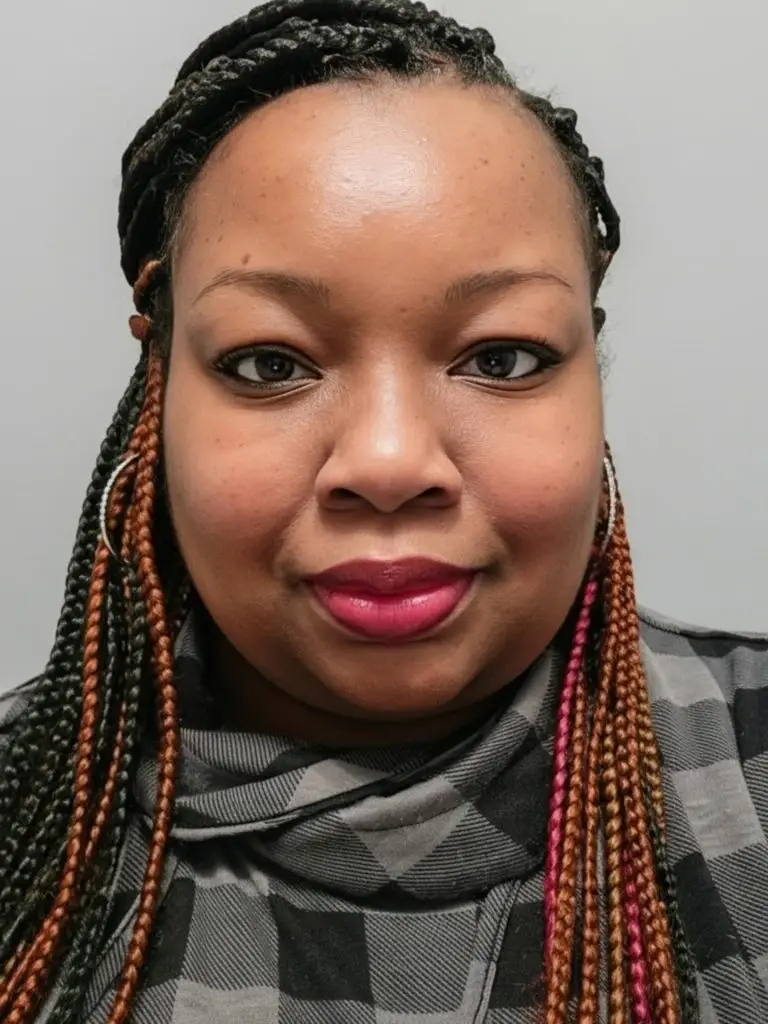
Read the full story Natasha wrote “Dream of Kalamazoo Foundation exemplifies nonprofits’ financial underpinning of economic development” published in Second Wave Media.
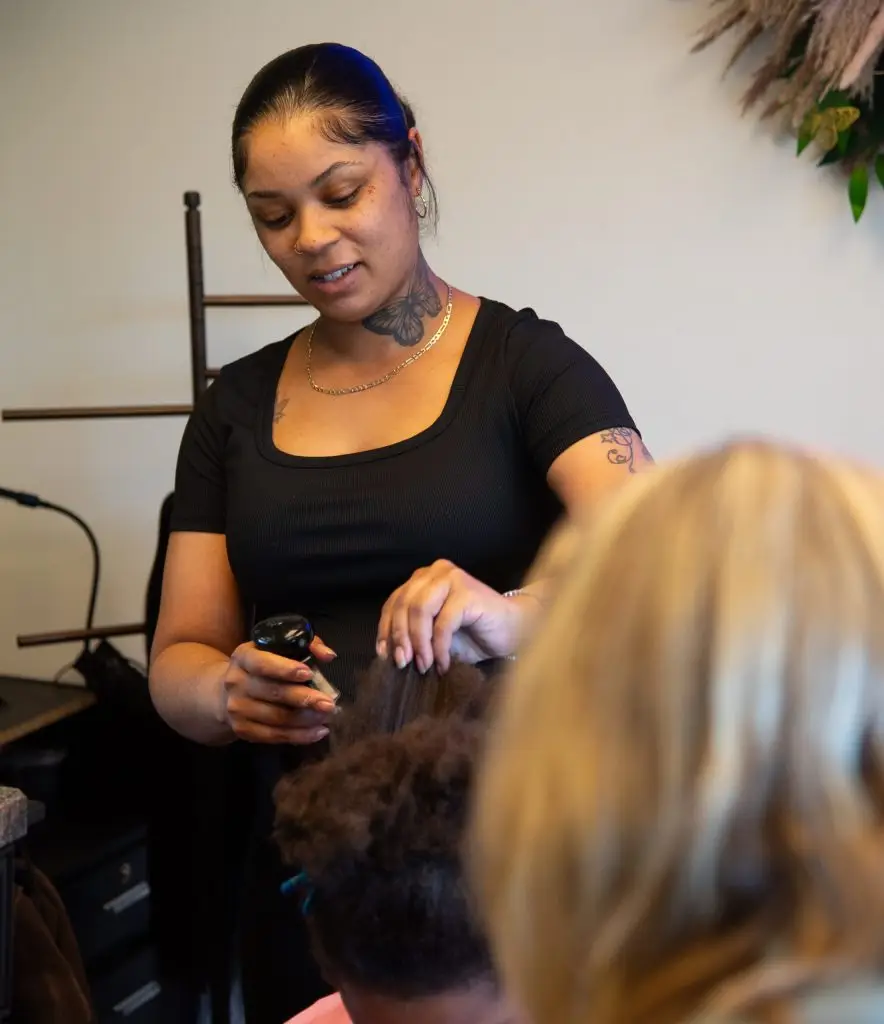
It was important to me because it highlighted how nonprofits contribute to the economy in ways people often overlook. For example, when you donate even a dollar to a place like St. Jude’s, it not only supports a child’s care but also the nurses and doctors who work there—and those dollars circulate in the community.
With Dream of Kalamazoo, they’re employing people locally and providing services locally. The salon itself serves people, but its nonprofit arm also provides free hair care services for foster children and youth, while educating foster parents on how to care for their children’s hair between styles. They even make product recommendations, so parents often go straight to buy those products afterward—further supporting local businesses.
It’s really a whole cycle of economic and community impact—from stylists being paid to parents spending money at beauty supply stores. I think people don’t always realize how something like that creates such a ripple effect.
I was surprised that the state doesn’t provide different allowances for different types of hair care needs. For example, a foster parent might receive the same subsidy whether they’re caring for a white boy who needs a $20 haircut or a Black girl who needs $200 braids every six weeks.
That creates a real financial gap—and it can make it hard for foster parents who aren’t familiar with different hair textures or the cost of maintenance to properly care for a child’s hair.
So learning that Dream of Kalamazoo helps fill that gap—by offering free hairstyles and education—was eye-opening. It’s not just about aesthetics; it’s about confidence, health, and dignity for these children.
Honestly, everyone I interviewed made an impression because each person brought their own passion and piece to this work.
But if I had to name one person, it would be Lalonie, the founder. She went through the foster care system herself, struggled with maintaining her own hair, and turned that personal experience into the drive to create a nonprofit that helps others.
She’s truly the heart of this work. And she’s dreaming big—hoping to expand this model statewide so foster youth everywhere can receive this same level of care.
This kind of journalism matters because it shines a light on real impact that people might not immediately see.
Right now, people are being more careful about how they spend or donate their money and time. By telling stories like this, we show them where their resources can truly make a difference.
Highlighting organizations like the Dream of Kalamazoo Foundation helps the public understand the hidden layers of impact and opportunity for growth that come from community-driven efforts. That’s what this journalism does—it helps connect people to meaningful causes.
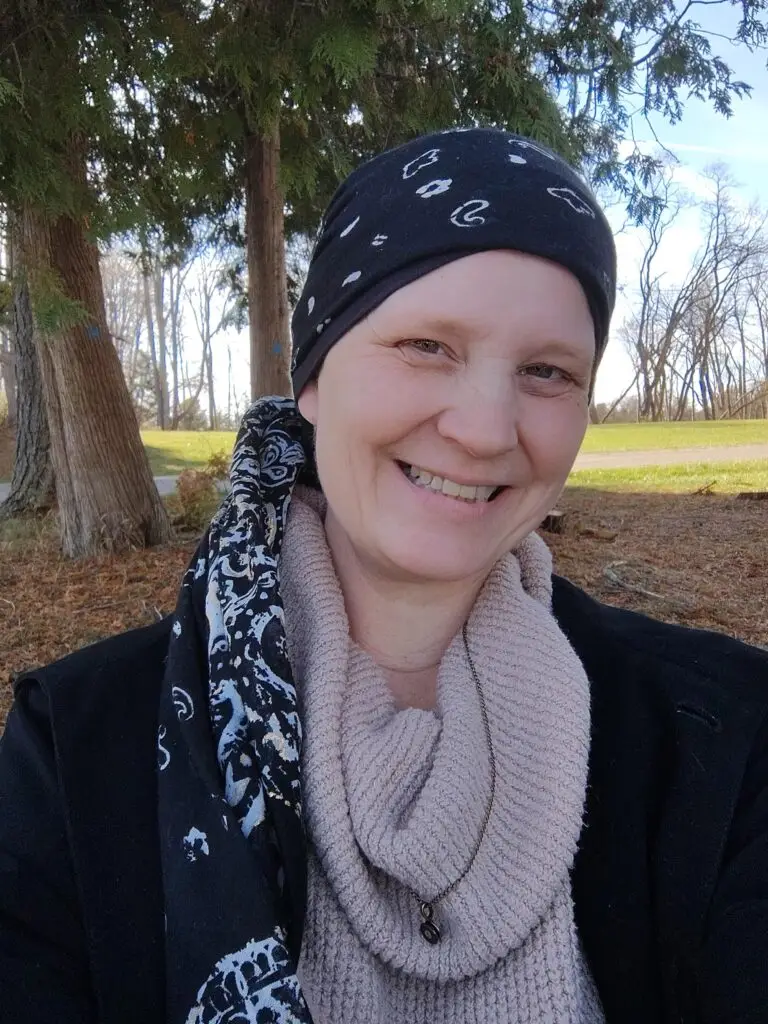
Read the full story Julie wrote “‘We just can’t compete’: Southwest Michigan farmers caught between high labor costs and cheap imports amid immigration uncertainty” published in Watershed Voice.

I came into this story knowing little about Michigan farming and almost nothing about specialty crop production. It stunned me to learn that Michigan is second only to California in crop diversity and to understand just how many workers it takes to transform the fertile fields of Berrien, Van Buren, and neighboring counties into major agricultural engines.
What I’ll remember most is the thrill of discovery. Diving into a completely unfamiliar topic meant that every hour of research and every interview brought a new revelation—another moment of “I had no idea.” Reporting this piece deepened my understanding of an industry that affects all of us in ways we may never think about, and that personal journey of learning made the story especially meaningful to me.
The biggest surprise was how challenging it was to find sources who would talk—especially farmers. Many were grateful someone was paying attention to an issue central to their livelihoods, but they were also terrified to speak publicly. The national crackdown on undocumented workers left them fearing penalties or losing vital labor if they spoke openly.
I heard “no” again and again, even from official sources. Farmers told me that sharing their story simply wasn’t worth the risk. It was a powerful reminder of how vulnerable people can feel when their livelihoods intersect with federal policy—and how much bravery it takes for anyone to speak on the record about such risks.
The people who made the biggest impression weren’t specific individuals so much as the ordinary folks who took a leap of faith and agreed to be interviewed. I am always in awe of their courage.
Talking to a journalist is frightening—we know that. And we take seriously the responsibility of holding people’s stories in trust. Those personal stories, every bit as much as statements from people in power, form the backbone of meaningful journalism. Without the voices of everyday people, news becomes noise.
Initially, I set out to understand how potential deportations might affect Southwest Michigan farmers. But the reporting journey revealed a much larger picture:
economic pressures threatening specialty crop farms,
human rights issues facing foreign workers, and
complex, long-standing relationships between employers and laborers from different countries.
What I love most about journalism is that no story stands alone. This one tapped directly into national conversations about immigration, labor, and who belongs—issues as old as our country and newly urgent because of recent federal actions.
This journalism matters now because lives are being directly affected right now. The stability of Michigan’s specialty crop industry touches not just farmers and immigrant workers but entire communities.
And more broadly, in a time of deep division, we desperately need journalism that presents full, multi-sided stories. We need to see that issues are rarely simple, and no single solution will untangle them. There is always more to understand—and that’s exactly why journalists are essential.

Read the full story Robert wrote “A Pillar of Hope & Resistance” published in Encore magazine.

Writing about dynamic African Americans like Stacey Randolph-Ledbetter matters deeply to me because Black Lives Matter. Her story, the stories of those connected to the Douglass Community Association, and the legacy of Frederick Douglass himself all resonate with my personal journey toward understanding race, racism, and justice in America.
I’ve known Stacy Randolph-Ledbetter since 2008, when I wrote about her and her husband for Encore Magazine. Over the years, I’ve stayed connected to them and participated in anti-racism events they hosted. But my motivation goes beyond a long-standing relationship.
I grew up in an all-White Michigan village in the 1950s and 60s, completely unaware of the Civil Rights Movement as it was happening. I knew nothing of Brown v. Board of Education, Emmett Till, Montgomery, Selma, James Meredith—the major turning points and tragedies shaping our country. My family didn’t discuss race. My school didn’t teach it. Those topics simply weren’t present in my world.
Only as an adult did I come to understand that this absence of knowledge was itself a symptom of systemic racism. That realization emerged through life experiences: meeting my first Black roommate at Western Michigan University, shaking the hand of Dr. King’s barber, attending Rosa Parks’ funeral, and participating in civil rights pilgrimages across the South in my late 60s.
These moments left deep impressions. They confronted me with what I didn’t know, what I didn’t do, and the profound injustices that occurred within my own lifetime.
Writing stories like this one is a form of atonement—an opportunity to document and uplift the lives, contributions, and humanity of people of color. It’s my way of being part of the solution rather than, through silence or ignorance, part of the problem.
One powerful realization during this reporting process was the ongoing, living legacy of the Douglass Community Association and the enduring work of the Civil Rights Movement. Founded in 1919 as a gathering place for Black WWI veterans, the Douglass continues to serve as a vital hub for education, community services, and youth programs.
I was struck by the breadth and depth of what Douglass staff and partners do daily—from violence prevention and youth development to community events, mentoring, and providing space for multiple social service agencies. Learning about individuals like Toney Patterson, who has served the Douglass for 40 years and began “Breakfast with Mr. Toney” simply because neighborhood children were hungry, reminded me that civil rights work is not history—it is present-tense action.
I was surprised, too, by how many partner organizations operate inside the Douglass, and how their collective work demonstrates that the Civil Rights Movement did not end in the 1960s. It has evolved into broader struggles for human rights, gender rights, immigrant rights, and more as the forces of racism and marginalization have also evolved.
Stacey Randolph-Ledbetter made a profound impression, as did the people whose lives and work intersect with the Douglass Community Association. Her leadership builds on more than a century of Douglass history and 23 previous executive directors who helped shape its legacy.
I also had support from Charles Parker, president and cofounder of Charlie’s P.L.A.C.E. He contributed to the interview and has an extraordinary story himself—one I was fortunate to tell in Encore in 2024. Parker’s lifelong commitment to elevating young people in Kalamazoo further reinforced the importance of communities nurturing their youth.
The Douglass’s longtime staff member, Toney Patterson, also stands out. For 40 years, he has mentored young men through basketball, chess, service projects, and simple acts of kindness rooted in dignity and care.
Meeting and learning from these individuals reminded me that the greatest teachers are often those doing the quiet, persistent work of justice at the community level.
This journalism matters because the fight for justice, equality, and human dignity is ongoing—and because stories shape what we see, understand, and act upon.
The Civil Rights Movement has transformed over the decades, but so have the forces that perpetuate discrimination. Today, injustice shows up not only through interpersonal prejudice but also through legislative actions, federal enforcement, and systemic practices that tear families apart and marginalize entire communities.
In that context, storytelling becomes a form of resistance. “The pen is mightier than the sword” is not just a phrase—it’s a call to action. Frederick Douglass knew this; Stacey Randolph-Ledbetter knows this; Charles Parker knows this. I am learning it, too.
By writing about people who are doing transformative work, I help ensure their contributions are recognized and understood. I help build awareness that we all share responsibility for building a just society. And I help counter the silence and ignorance that once shaped my own upbringing.
We need this journalism because it teaches, challenges, connects, and reminds us that the lives and contributions of people of color matter—not just to some, but to all of us.

Read the housing series Julie wrote below published in MLive/Kalamazoo Gazette:

After nearly 50 years as a journalist, I’ve learned that one story often leads to another. This particular reporting project began with two informal conversations — one with Kalamazoo County Housing Director Mary Balkema, who mentioned a controversy in Comstock Township around an affordable housing proposal, and another with a Portage zoning board member who shared thoughtful insights about zoning and housing affordability.
These casual interactions sparked my curiosity and ultimately led me into deeper interviews and research. As I dug in, I realized just how powerful zoning ordinances are in shaping our communities, our housing options, and our ability to meet real, growing needs. This story mattered to me because it reminded me that journalism often starts with listening — and can help people see familiar topics in new, meaningful ways.
One of the most striking insights was how often sources emphasized the same key point: land is finite, and the traditional American Dream of a single-family home on a large lot may not be the best or most sustainable use of that limited resource. It’s also a major contributor to rising housing prices.
I was also struck by the widespread agreement that higher-density housing — multi-family units, duplexes, townhomes, or smaller single-family homes on smaller lots — makes strong sense in today’s world. Household sizes are shrinking, and more people want walkable neighborhoods with easy access to stores, restaurants, and community amenities.
Yet despite these benefits, I learned just how intense the pushback can be. Many people fear that increased density will harm property values, and that fear often becomes a barrier to needed policy changes.
Two individuals helped shape the reporting before it even officially began:
Their willingness to talk openly and thoughtfully sparked the deeper reporting and helped frame the questions I went on to explore. Their insights were a powerful reminder of how everyday conversations can uncover important community issues.
Zoning may seem technical or abstract, but it affects people’s lives in profound ways — from the cost of housing to the character of neighborhoods and the vibrancy of communities. Right now, with affordable housing shortages growing, these conversations are more urgent than ever.
My hope is that stories like this help readers pause and reconsider assumptions about higher-density housing. Instead of seeing it as a threat, I hope people recognize it as a win-win: a way to expand affordable options, support individuals and families seeking accessible housing, and create more lively, walkable, economically healthy communities.
Journalism matters because it helps people understand the systems shaping their daily lives — and invites them to imagine what’s possible.
The journalists you’ve read here are committed to telling the stories that shape who we are as a region. Your support makes that possible. Help ensure Southwest Michigan’s stories continue to be told with honesty, depth, and heart.